How Fast Can You Make a Tattoo Mockup with AI?
The speed at which artificial intelligence is used to generate tattoo renderings has reached an astonishing level. Traditionally, it takes tattoo artists an average of 3 to 5 hours to manually draw a complex effect drawing. But now, an advanced tattoo ai generator can provide up to 10 preliminary design plans in just 30 seconds, increasing efficiency by approximately 98%. For instance, a stress test conducted by the technology company TattooAI in 2023 revealed that its platform could handle over 100 user requests per minute under peak load, with an average response time of only 4.2 seconds for generating renderings, significantly reducing the cycle from consultation to decision-making for customers. Compress the communication process that might have lasted for several days to be completed within just a few minutes.
This increase in speed directly translates into significant economic benefits. For independent tattoo studios, using AI to create renderings can reduce the cost of a single design consultation by over 60%, saving an average of about $50 in labor costs. A survey of 500 tattoo parlors shows that after integrating AI tools, the client throughput of the studios has increased by 35%, as artists can now handle up to 5 client concept discussions per hour instead of 1 to 2 previously. Market leader Inkcept reported in early 2024 that the conversion rate of users who used AI-generated renderings increased by 20%, which means that more customers who browsed ideas eventually completed their tattoos, directly driving the growth of revenue. However, speed is not the only consideration. The matching degree between the generated solution and the customer's real ideas, that is, the accuracy, is currently at an industry average of about 85%, and there is still room for improvement.
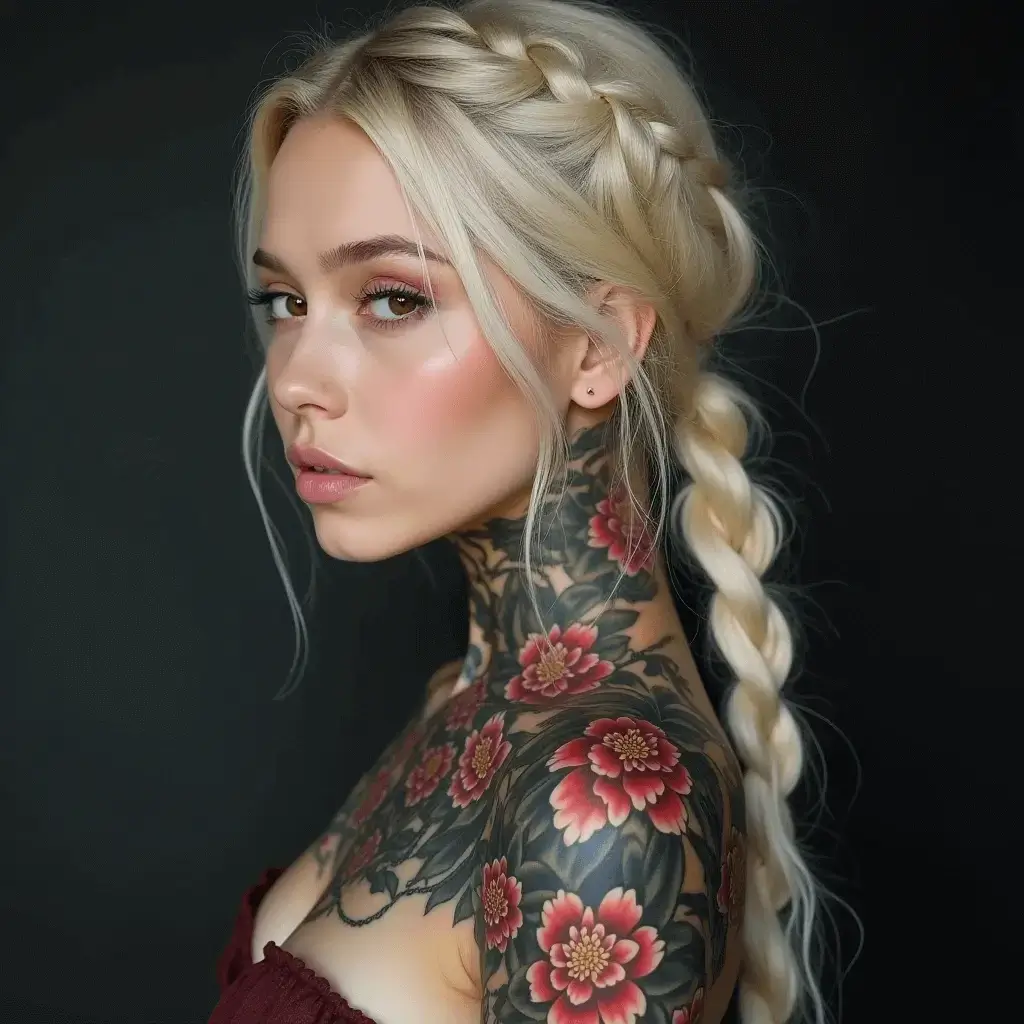 Despite its astonishing speed, there is a certain degree of fluctuation in the quality and applicability of AI-generated renderings. The performance of an algorithm is highly dependent on the quality and quantity of the training data. A model trained on 10 million high-quality tattoo images has an aesthetic acceptance of its output scheme that is 30% higher than that of a model trained on only 1 million images. Skin simulation technology is a crucial link. Advanced systems can simulate the display effect of ink on different skin tones (Fitzpatrick Scale types I to VI), humidity and muscle curvature. However, the current technology's simulation accuracy is approximately 90%, and there may be a deviation of about 10% when representing fine textures and light and shadow transitions. There was once a case showing that a user was very satisfied with the effect drawing generated by AI within 10 seconds, but after actually getting a tattoo, they found that the degree of deformation of the pattern when the arm was bent was 15% different from the preview on the screen. This highlights the gap that still needs to be bridged between the virtual and the real.
Looking to the future, the speed and accuracy of AI-generated tattoo renderings will be more closely integrated. The next-generation technology is integrating real-time augmented reality (AR) rendering, allowing users to project renderings to precise positions on their bodies within 0.5 seconds through their smartphone cameras, and dynamically adjust the size (with an error range of less than 1 centimeter) and Angle. It is predicted that by 2025, 70% of online tattoo design platforms will offer this instant preview service. But the core trend indicates that the most successful workflow will be the combination of "AI speed" and "artist depth" : The AI can quickly generate 100 possibilities within the first two minutes, and then the tattoo artist spends 15 minutes making personalized adjustments and deepening the details. This collaborative strategy can increase the final customer satisfaction to over 95%, achieving the best balance between efficiency and artistic integrity.
Despite its astonishing speed, there is a certain degree of fluctuation in the quality and applicability of AI-generated renderings. The performance of an algorithm is highly dependent on the quality and quantity of the training data. A model trained on 10 million high-quality tattoo images has an aesthetic acceptance of its output scheme that is 30% higher than that of a model trained on only 1 million images. Skin simulation technology is a crucial link. Advanced systems can simulate the display effect of ink on different skin tones (Fitzpatrick Scale types I to VI), humidity and muscle curvature. However, the current technology's simulation accuracy is approximately 90%, and there may be a deviation of about 10% when representing fine textures and light and shadow transitions. There was once a case showing that a user was very satisfied with the effect drawing generated by AI within 10 seconds, but after actually getting a tattoo, they found that the degree of deformation of the pattern when the arm was bent was 15% different from the preview on the screen. This highlights the gap that still needs to be bridged between the virtual and the real.
Looking to the future, the speed and accuracy of AI-generated tattoo renderings will be more closely integrated. The next-generation technology is integrating real-time augmented reality (AR) rendering, allowing users to project renderings to precise positions on their bodies within 0.5 seconds through their smartphone cameras, and dynamically adjust the size (with an error range of less than 1 centimeter) and Angle. It is predicted that by 2025, 70% of online tattoo design platforms will offer this instant preview service. But the core trend indicates that the most successful workflow will be the combination of "AI speed" and "artist depth" : The AI can quickly generate 100 possibilities within the first two minutes, and then the tattoo artist spends 15 minutes making personalized adjustments and deepening the details. This collaborative strategy can increase the final customer satisfaction to over 95%, achieving the best balance between efficiency and artistic integrity.
Despite its astonishing speed, there is a certain degree of fluctuation in the quality and applicability of AI-generated renderings. The performance of an algorithm is highly dependent on the quality and quantity of the training data. A model trained on 10 million high-quality tattoo images has an aesthetic acceptance of its output scheme that is 30% higher than that of a model trained on only 1 million images. Skin simulation technology is a crucial link. Advanced systems can simulate the display effect of ink on different skin tones (Fitzpatrick Scale types I to VI), humidity and muscle curvature. However, the current technology's simulation accuracy is approximately 90%, and there may be a deviation of about 10% when representing fine textures and light and shadow transitions. There was once a case showing that a user was very satisfied with the effect drawing generated by AI within 10 seconds, but after actually getting a tattoo, they found that the degree of deformation of the pattern when the arm was bent was 15% different from the preview on the screen. This highlights the gap that still needs to be bridged between the virtual and the real.
Looking to the future, the speed and accuracy of AI-generated tattoo renderings will be more closely integrated. The next-generation technology is integrating real-time augmented reality (AR) rendering, allowing users to project renderings to precise positions on their bodies within 0.5 seconds through their smartphone cameras, and dynamically adjust the size (with an error range of less than 1 centimeter) and Angle. It is predicted that by 2025, 70% of online tattoo design platforms will offer this instant preview service. But the core trend indicates that the most successful workflow will be the combination of "AI speed" and "artist depth" : The AI can quickly generate 100 possibilities within the first two minutes, and then the tattoo artist spends 15 minutes making personalized adjustments and deepening the details. This collaborative strategy can increase the final customer satisfaction to over 95%, achieving the best balance between efficiency and artistic integrity.